Discover what the oral microbiome is, how it works, and why maintaining a balanced oral environment is becoming an important part of the oral wellness conversation.
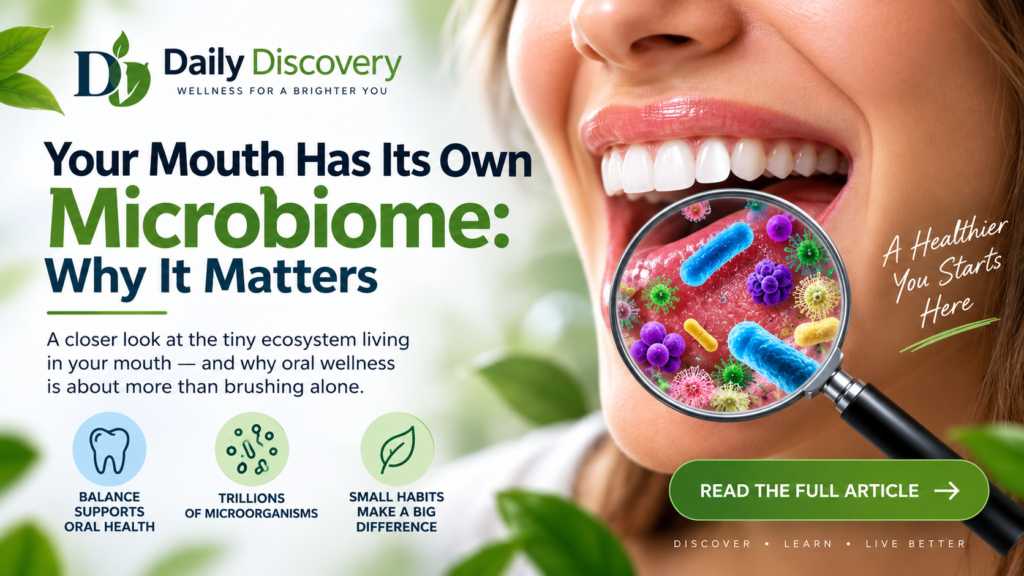
Your mouth is home to much more than teeth, gums, and your tongue. It also contains a complex community of microorganisms known as the oral microbiome.
This microbiome includes bacteria, fungi, viruses, and other microscopic organisms that naturally live throughout the mouth. Researchers estimate that the human oral cavity can contain hundreds of different microbial species, forming communities on the teeth, tongue, gums, and other surfaces.
That may sound surprising, especially because we often associate bacteria with something that needs to be eliminated. But the picture is more complex.
Not All Bacteria Are the Enemy
Some oral microbes can contribute to problems when conditions allow them to become dominant. Others are part of the normal ecosystem of the mouth and may help prevent potentially harmful microbes from taking over.
This is why researchers increasingly study oral health in terms of balance, rather than simply trying to eliminate every microorganism.
Scientists use the term homeostasis to describe a relatively stable and balanced microbial environment. When that balance changes significantly, a process often called dysbiosis, certain oral health problems can become more likely.
Your Mouth Is an Ecosystem
Different parts of your mouth create different environments.
The surface of a tooth is very different from your tongue, saliva, or the area between your gums and teeth. Because of this, different microbial communities can develop in different locations.
Researchers have found that these communities interact with one another as well as with the body’s immune system. This makes the oral microbiome a surprisingly complex ecosystem.
What Can Affect the Oral Microbiome?
Your oral environment is influenced by many everyday factors.
Diet, oral hygiene, tobacco use, alcohol consumption, lifestyle habits, medications, and certain health conditions can all influence the composition of the oral microbiome.
And, of course, the basics still matter.
Regular brushing, flossing, professional dental care, and other established oral-hygiene practices remain important parts of maintaining oral health. NIH guidance notes that brushing and flossing help control plaque-forming microbial communities, even though microbes naturally begin growing again afterward.
A Different Way to Think About Oral Wellness
The growing interest in the oral microbiome does not mean traditional dental care should be replaced.
Instead, it adds another layer to how scientists understand the mouth.
Rather than thinking only in terms of “good” versus “bad” bacteria, researchers are studying how entire microbial communities interact and how maintaining a healthy oral environment may influence oral health. The National Institute of Dental and Craniofacial Research continues to support research specifically focused on how the oral microbiome functions in health and disease.
That makes the oral microbiome an interesting area to watch as research continues to develop.
The Daily Discovery
The next time you brush your teeth, remember that you’re caring for more than just the visible surface of your smile.
You’re also interacting with an entire microscopic ecosystem.
And understanding that ecosystem may eventually change the way we think about everyday oral wellness.
Suggested excerpt
Your mouth is home to hundreds of microbial species. Discover how the oral microbiome works and why scientists are paying closer attention to this tiny ecosystem.