When most people hear the word microbiome, they immediately think about the gut.
But the mouth has its own microbial ecosystem too.
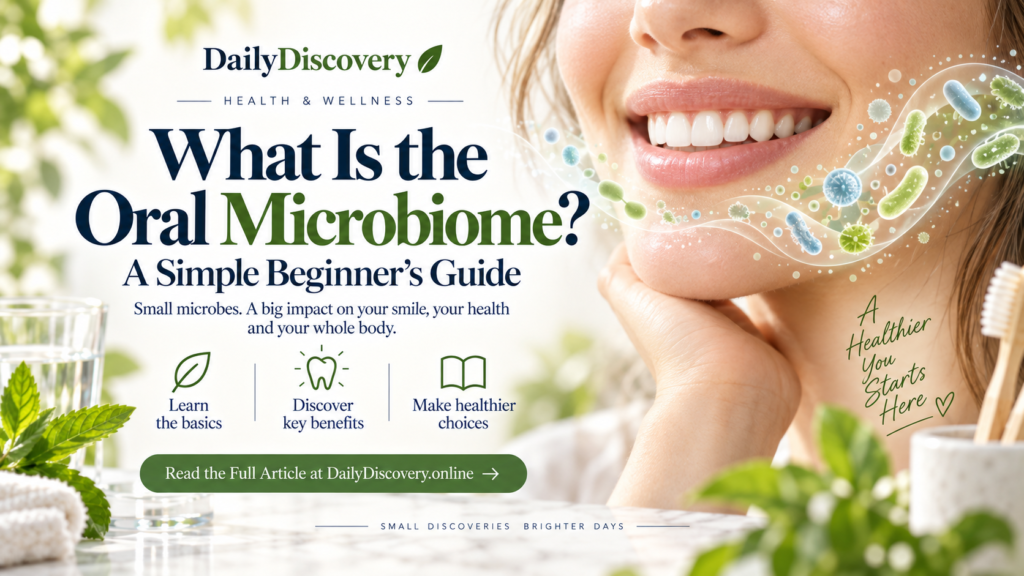
The oral microbiome is the community of bacteria, fungi, viruses and other microorganisms that live throughout the mouth — including on the tongue, teeth, gums and other oral surfaces. Researchers study these communities because they are part of normal oral biology and can interact with both oral tissues and the immune system.
That does not mean every microorganism in the mouth is harmful.
In fact, the oral microbiome is best understood as a complex ecosystem rather than a simple battle between “good” and “bad” bacteria.
Your mouth contains many different microbial habitats
The mouth is not one uniform environment.
The tongue, teeth, gums and saliva each create different conditions for microorganisms to live in. Researchers have found that these microbial communities can be highly organized and vary depending on where they are located in the mouth.
That helps explain why oral microbiome research is so complex.
A microorganism found on the tongue may behave differently from one living in dental plaque or near the gumline.
Balance matters more than eliminating bacteria
It is easy to think that oral care is simply about removing as many bacteria as possible.
But the mouth naturally contains hundreds of microbial species, and many are part of normal physiology. Researchers increasingly focus on how microbial communities remain balanced — and what happens when that balance changes.
This does not mean hygiene is less important.
Brushing, interdental cleaning and regular dental care remain fundamental.
The point is simply that oral health involves a living biological environment, not a sterile surface.
What can influence the oral microbiome?
The composition of the oral microbiome can be influenced by many factors, including:
- oral hygiene habits;
- diet;
- saliva;
- age;
- medications;
- smoking;
- dental conditions;
- general health;
- environmental exposures.
Researchers also know that the oral microbiome changes over the course of life rather than remaining fixed.
That means there is no single “perfect” oral microbiome that looks identical in every person.
How is the oral microbiome connected to oral health?
Scientists study the oral microbiome because changes in microbial communities are associated with conditions such as tooth decay and periodontal disease.
These relationships are not always simple cause-and-effect stories. Microorganisms interact with diet, immune responses, oral hygiene, saliva and other factors.
Current research often uses the term dysbiosis to describe a disrupted microbial ecosystem associated with disease processes.
This is one reason modern oral-health research increasingly looks at the entire ecosystem instead of focusing only on individual bacterial species.
What about the connection between the mouth and the rest of the body?
Researchers have also identified associations between oral disease and several systemic health conditions.
For example, studies have examined links involving periodontal disease and cardiovascular disease, diabetes, pregnancy outcomes and other conditions. However, an association does not automatically prove that one condition directly causes another.
The National Institute of Dental and Craniofacial Research notes that oral-systemic connections are well established, while the exact biological mechanisms behind many of those relationships are still being investigated.
That distinction matters.
It is reasonable to say that oral health is connected to broader health.
It is not reasonable to assume that changing the oral microbiome alone can prevent or treat unrelated diseases.
Why are oral probiotics becoming more popular?
As microbiome science has become more familiar to consumers, companies have started developing products marketed around the idea of supporting oral microbial balance.
This includes oral probiotics.
The concept is interesting, but the category should be approached carefully.
Different probiotic strains are not interchangeable, and results from research on one strain should not automatically be applied to every product.
That is why it is useful to look beyond the word “probiotic” and ask:
- Which strains are included?
- How much is provided?
- What evidence exists for those specific strains?
- Is the product making modest wellness claims or dramatic medical promises?
The oral microbiome is an active area of research
Microbiome science is developing quickly.
Researchers continue to investigate how oral microbial communities form, how they change and how they interact with both oral tissues and overall health. NIDCR maintains dedicated research programs focused specifically on oral microbiology and polymicrobial disease.
This makes the oral microbiome scientifically interesting.
It also means consumers should be cautious when marketing claims move faster than the evidence.
What does this mean for everyday oral care?
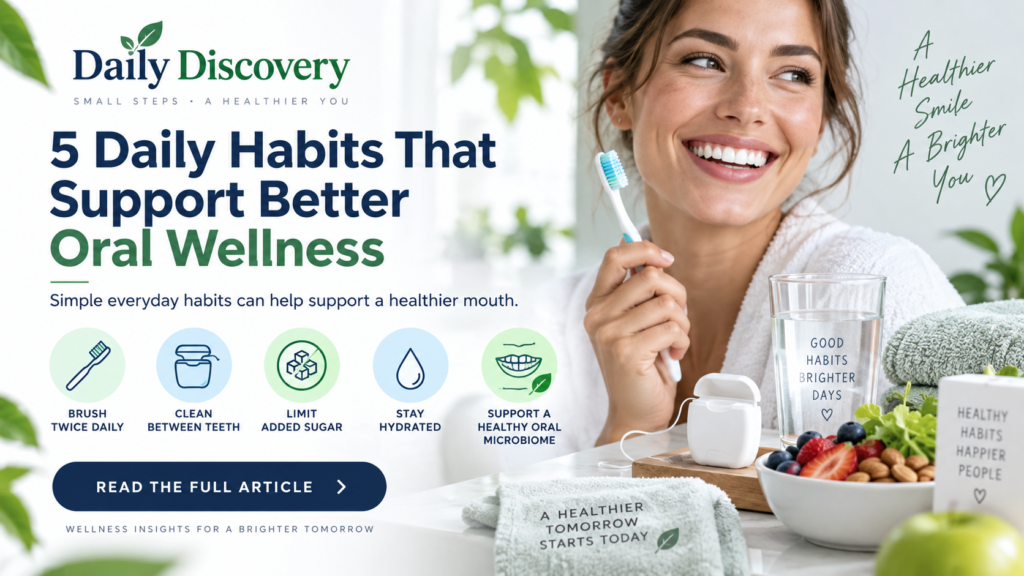
For most people, the practical foundation remains familiar:
Brush regularly.
Clean between teeth.
Limit frequent exposure to added sugars.
Drink water.
Avoid tobacco.
Keep up with professional dental care.
Newer microbiome-focused products may become part of the wellness conversation, but they should not replace established oral-care habits or professional treatment when needed.
A useful way to think about the microbiome
You do not need to become a microbiologist to make better oral-health decisions.
A useful starting point is simply understanding that the mouth is a living ecosystem.
That perspective can make it easier to evaluate new products, understand emerging research and recognize when marketing claims oversimplify a complicated biological system.
The oral microbiome is worth understanding — but not oversimplifying.
Health disclaimer: This article is for general informational and educational purposes only and does not constitute dental or medical advice. Individual oral-health needs vary. Consult a qualified dentist or healthcare professional regarding your personal circumstances.