Oral wellness does not usually depend on one dramatic change.
More often, it comes down to a handful of simple habits repeated consistently over time.
Brushing, cleaning between the teeth, watching added sugar intake, drinking water and keeping up with dental visits may sound basic, but these everyday behaviors remain some of the most important foundations of oral care. The American Dental Association recommends brushing twice a day with fluoride toothpaste and cleaning between the teeth daily, while the CDC also emphasizes regular oral hygiene and routine dental care.
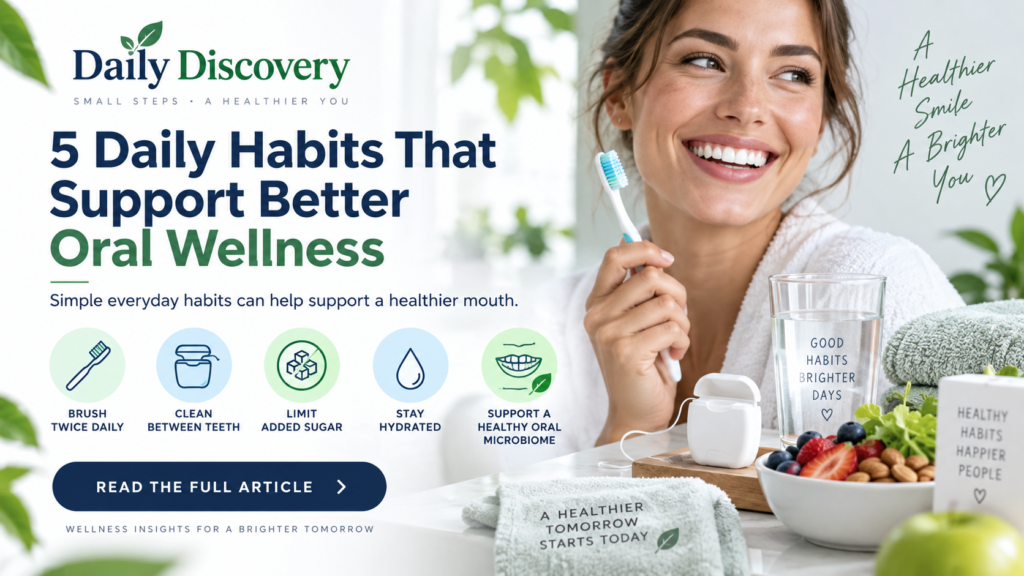
Here are five practical habits worth keeping in mind.
1. Brush twice a day — and give it enough time
Brushing is one of those habits that is easy to rush.
The ADA recommends brushing for about two minutes, twice a day, using fluoride toothpaste. Soft-bristled toothbrushes are generally recommended, and both manual and powered brushes can be effective when used properly.
The goal is not aggressive scrubbing.
A consistent, thorough routine is more useful than brushing harder.
It is also a good idea to replace a toothbrush or brush head every three to four months, or sooner if the bristles become visibly worn.
2. Clean between your teeth every day
A toothbrush cannot easily reach every surface.
That is why interdental cleaning matters.
Floss, interdental brushes and certain other cleaning tools can help remove plaque and debris from areas between the teeth that brushing may miss. The ADA recommends cleaning between the teeth once a day as part of a regular oral-care routine.
The best method is often the one you are most likely to use consistently.
Some people prefer traditional floss, while others find small interdental brushes or water flossers easier to incorporate into their routine.
3. Pay attention to added sugar
Oral wellness is influenced by more than brushing alone.
Frequent exposure to sugary foods and beverages can contribute to tooth decay, especially when sugar is consumed repeatedly throughout the day.
The CDC recommends limiting foods and drinks with added sugar as part of maintaining good oral health.
That does not mean every sweet food needs to disappear from your diet.
A more practical approach is to notice frequency.
Constant snacking and sipping on sugary drinks can create repeated exposure throughout the day, while structured meals and water between meals may be easier on an oral-care routine.
4. Make water part of your routine
Water is simple, inexpensive and easy to overlook.
Drinking water can help rinse the mouth after eating and supports normal saliva production.
The CDC also recommends fluoridated tap water where available as part of everyday oral-health practices.
Water can also be a practical replacement for sugary drinks when you are trying to reduce how often your teeth are exposed to added sugars.
A small habit such as keeping a reusable water bottle nearby can make this easier without requiring much thought.
5. Do not wait for discomfort before seeing a dentist
It can be tempting to think of dental care only when something hurts.
But regular dental visits are also about prevention, early detection and maintaining oral health over time.
The CDC advises adults to see a dentist at least once a year, while the ADA emphasizes regular dental care as part of reducing the risk of oral disease.
Individual needs vary, so some people may benefit from more frequent visits depending on their dental history, risk factors and professional recommendations.
Small habits work better when they are easy to repeat
One reason healthy routines fail is that they become too complicated.
A long checklist can feel motivating for a few days and then become difficult to maintain.
Instead, oral wellness can be approached as a simple system:
Brush twice daily.
Clean between teeth once a day.
Choose water often.
Be mindful of added sugar.
Keep up with preventive dental care.
Those actions may not feel exciting, but consistency matters.
What about the oral microbiome?
The mouth is home to a diverse community of microorganisms known collectively as the oral microbiome.
Researchers continue to study how these microbial communities interact with oral tissues, the immune system and different aspects of health.
That research has also helped create interest in categories such as oral probiotics.
But newer wellness products should be viewed as potential additions to — not replacements for — basic oral-care habits.
The fundamentals still matter.
A practical approach to oral wellness
Better oral care does not necessarily require a complete lifestyle overhaul.
It may be more useful to ask:
Are the basics happening consistently?
Is the routine realistic enough to maintain?
Are product claims being evaluated carefully?
And is professional care being used when needed?
Those questions can help keep oral wellness simple and evidence-informed.
Better habits do not need to be dramatic to be meaningful.
Health disclaimer: This article is for general informational and educational purposes only and does not constitute dental or medical advice. Individual oral-health needs vary. Consult a qualified dentist or healthcare professional regarding your personal circumstances.